Research
Principled machine learning, grounded in the life sciences
We develop machine learning methods that are reliable, data-efficient and aware of their own uncertainty, and we apply them to challenging problems in biology, agriculture, ecology and medicine.

Uncertainty quantification & probabilistic models
This research line started more than ten years ago, at that stage with a focus on Bayes-optimal inference from probabilistic models. Since then our interests have extended to quantifying epistemic and aleatoric uncertainty, classifier calibration, set-valued prediction, prediction intervals, conformal prediction, open-set recognition and out-of-distribution detection.
- Epistemic & aleatoric uncertainty
- Calibration
- Conformal prediction
- Set-valued prediction
- OOD detection
Multi-target prediction
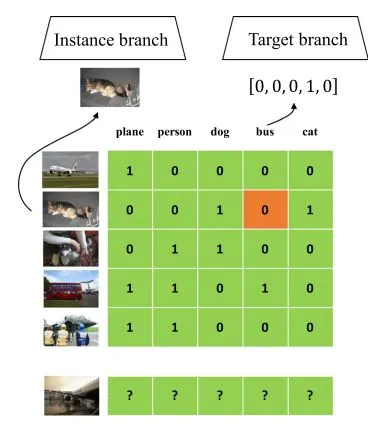
Multi-target prediction is an umbrella term for complex machine learning settings such as multi-label classification, multivariate regression, pairwise learning, dyadic prediction, matrix completion and zero-shot learning. Willem Waegeman has co-organized many tutorials and workshops on the topic and published numerous papers on it. A current focus is the development of flexible AutoML software for multi-target prediction problems.
- Multi-label classification
- Pairwise learning
- Matrix completion
- Zero-shot learning
- AutoML
Applications in the life sciences
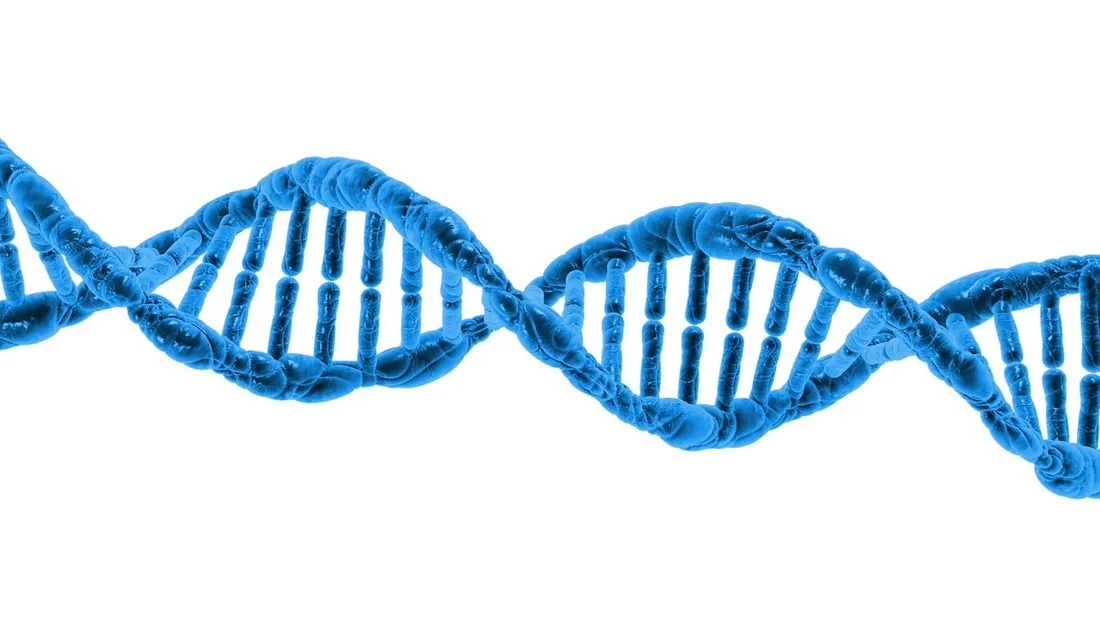
Over the last decade we have developed machine learning solutions for all sorts of -omics data — genomics, epigenomics, transcriptomics and proteomics — as well as for specific phenotyping technologies, with applications in environmental sciences, agriculture and medicine. Larger projects also involved the analysis of climate time series and timber provenance.
- Genomics
- Transcriptomics
- Proteomics
- Agriculture
- Ecology

Sequence models & time series analysis
Specific interests include sequence labelling, autoregressive models, transformers for biological sequences, time series forecasting, causal inference in time series, feature learning for sequential data and spatio-temporal problems.
- Transformers
- Sequence labelling
- Forecasting
- Granger causality
- Spatio-temporal models
Impact
Most cited work
Citation counts from Google Scholar, as of September 2026.
-
3517 cites
Aleatoric and epistemic uncertainty in machine learning: An introduction to concepts and methods
Eyke Hüllermeier, Willem Waegeman
Machine Learning · 2021
-
930 cites
A community effort to assess and improve drug sensitivity prediction algorithms
James C Costello, Laura M Heiser, Elisabeth Georgii, Mehmet Gönen et al.
Nature biotechnology · 2014
-
557 cites
On label dependence and loss minimization in multi-label classification
Krzysztof Dembczyński, Willem Waegeman, Weiwei Cheng, Eyke Hüllermeier
Machine Learning · 2012
-
459 cites
Absolute quantification of microbial taxon abundances
Ruben Props, Frederiek-Maarten Kerckhof, Peter Rubbens, Jo De Vrieze et al.
The ISME journal · 2017
-
300 cites
Bacterial species identification from MALDI-TOF mass spectra through data analysis and machine learning
Katrien De Bruyne, Bram Slabbinck, Willem Waegeman, Paul Vauterin et al.
Systematic and applied microbiology · 2011
-
240 cites
An experimental comparison of cross-validation techniques for estimating the area under the ROC curve
Antti Airola, Tapio Pahikkala, Willem Waegeman, Bernard De Baets et al.
Computational Statistics & Data Analysis · 2011